

Your website is your storefront, your handshake, and your first impression all at once.
To truly align website design with your personal brand means strategically integrating your visual identity, messaging, and user experience so every page builds trust and moves visitors toward becoming clients. Coaches, entrepreneurs, and consultants who treat their website as a passive brochure lose potential clients every day to competitors who have figured this out.
This guide walks you through the exact frameworks to make your site work as hard as you do.
What are the branding pillars that align website design with your personal brand?
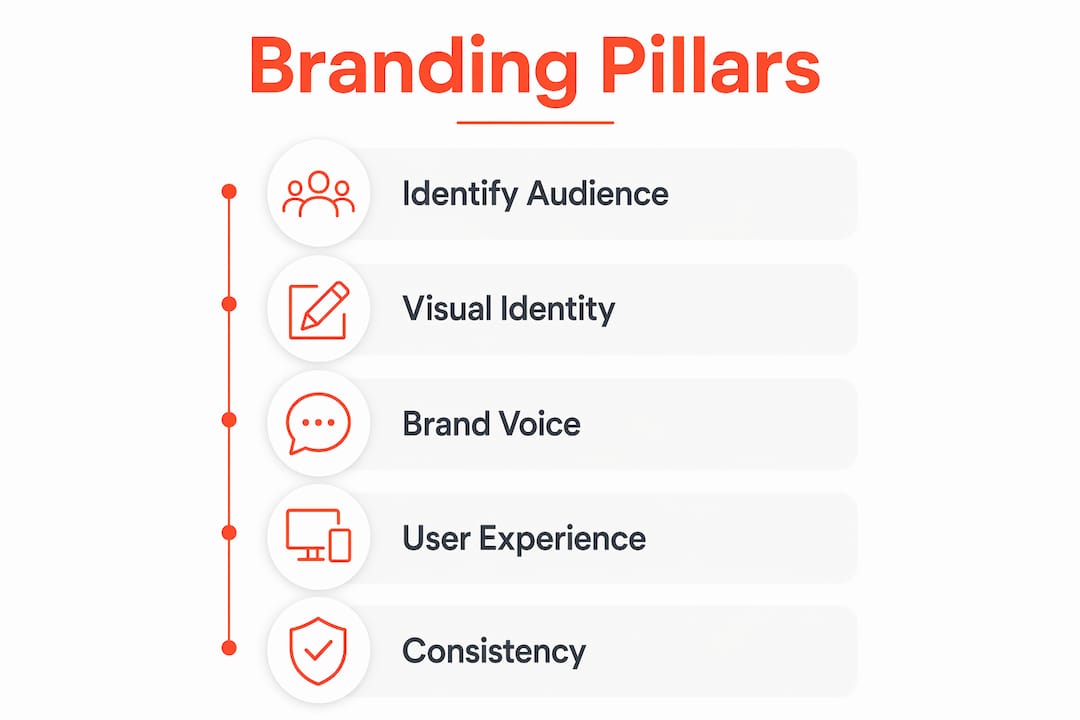
Website branding is defined as the strategic alignment of design visuals, brand voice messaging, and user experience to build trust across every page. These three pillars are not optional extras. They are the foundation of every personal brand website that actually converts.
Visual identity is the most immediately recognizable layer. It includes your logo, color palette, typography choices, and photography style. When a visitor lands on your site and sees a mismatched font or a stock photo that looks nothing like you, they feel the disconnect even if they cannot name it. Consistency here signals professionalism.

Brand voice is how your site sounds. Your headline tone, your service descriptions, your about page copy. All of it should sound like the same person wrote it, because it should. A life coach who speaks warmly in person but has cold, corporate copy on their website creates confusion, and confused visitors leave.
User experience (UX) is how your site feels to navigate. Fast load times, clear menus, and mobile-friendly layouts are not just technical niceties. They are trust signals. A site that is slow or hard to use tells visitors you do not pay attention to details, which is a terrible message for any coach or consultant to send.
-
Visual identity: Logo, color palette, typography, and imagery must be consistent across all pages
-
Brand voice: Headline tone and copy style should match how you actually speak to clients
-
UX fundamentals: Navigation clarity, mobile responsiveness, and load speed all shape brand perception
-
Trust and recognition: Cohesion across all three pillars builds the familiarity that converts visitors into leads
Pro Tip: Create a one-page brand reference sheet listing your exact hex color codes, font names, and two or three adjectives that describe your brand voice. Share it with every designer, copywriter, or VA who touches your site.
How should your homepage communicate your personal brand immediately?
Your homepage is not a welcome mat. It is a decision and routing layer that guides visitors through a decision flow aligned with your personal brand. Every element on it should have one job: move the right person toward the right next step.
Here is how to build a homepage that does that job well:
-
Lead with a specific positioning headline. Your headline should answer three questions in under five seconds: who you help, what you help them do, and why you are the right person. “I help burned-out executives reclaim their energy and lead with clarity” is specific. “Welcome to my coaching practice” is not.
-
Use a real professional photo. Stock images kill personal brand credibility instantly. A high-quality photo of you, ideally in your working environment or doing something that reflects your personality, tells visitors they are dealing with a real human being they can trust.
-
Place social proof near the top. Trust signals near the hero such as client logos, testimonials, and client counts improve credibility and reduce bounce rates. Burying proof in the footer is one of the most common and costly mistakes coaches make.
-
Use one primary call to action. Multiple competing CTAs reduce conversions by forcing visitors to choose instead of act. Pick one: book a call, download a guide, or join your list. Not all three.
-
Make your testimonials specific. Generic quotes like “She was amazing!” do not convert. Specific testimonials with names, photos, and numbers convert significantly better because they give skeptical visitors something concrete to evaluate.
Pro Tip: Test your homepage on your phone right now. If your headline is cut off, your photo is awkward, or your CTA button is hard to tap, you are losing mobile visitors every single day.
What steps should you take before designing your personal brand website?
Most coaches and consultants make the same expensive mistake: they start with a logo or a color palette before they have clarity on their positioning. Starting with design before positioning and messaging causes brand drift and costly rework down the line. Strategy has to come first.
Think of it this way: brand strategy is the argument you are making to the market. Brand identity is the visual evidence that supports that argument. Web design is how you deploy it. Skip the first step and the whole structure collapses.
Before you brief a designer or pick a template, work through these foundations:
-
Define your target audience precisely. Not “women who want to improve their lives” but “female executives in their 40s navigating career transitions after burnout.” The more specific, the more your design decisions will make sense.
-
Clarify your positioning. What makes you different from the other coaches in your niche? Your website design should visually reinforce that difference, not just state it in copy.
-
Build a messaging hierarchy. Decide what your visitor needs to understand first, second, and third. This hierarchy drives your page structure and headline sequence.
-
Develop your visual system. Choose two to three brand colors, two fonts (one for headings, one for body text), and a photography style that reflects your brand character. This is your brand identity and it should be locked in before a single page is designed.
Skipping these steps does not save time. It creates a website that looks fine but fails commercially, because design without strategy is just decoration.
How do you maintain brand consistency on your website over time?
Building a great personal brand website is one thing. Keeping it consistent as you add pages, blog posts, new services, and updated photos is another challenge entirely. This is where a design system and style guide become your best friends.
A style guide is a living document that captures every visual and verbal rule for your brand. Think of it as the rulebook that prevents your site from slowly drifting away from your original vision every time someone adds a new page or updates a section.
Here is what a practical style guide for a coach or consultant should include:
| Element | What to document |
|---|---|
| Typography | Exact font names, sizes, and weights for headings and body text |
| Color palette | Hex codes for primary, secondary, and accent colors |
| Button styles | Shape, color, hover state, and label language |
| Imagery rules | Photo style, filters, and guidelines for what to avoid |
| Voice guidelines | Tone adjectives, banned phrases, and sample approved copy |
Beyond the style guide, use an approved-asset workflow. This means storing all brand-approved photos, logos, and graphics in one shared folder (Google Drive or Dropbox work fine) so that anyone updating your site pulls from the right source. The alternative is brand drift: slightly wrong colors, outdated headshots, and inconsistent button styles that slowly erode the polished look you worked hard to build.
How does UX design affect your personal brand perception and client trust?
UX design, which stands for user experience design, is the practice of shaping how visitors feel as they move through your site. For coaches and consultants, it directly affects whether a visitor trusts you enough to take the next step.
Your hero section, the first thing visitors see, needs to answer what you do, who you serve, and what to do next in under two seconds. Hero clarity and mobile load speed under 2.5 seconds are critical for engagement and reducing bounce rates. A slow, cluttered hero section is the single fastest way to lose a qualified lead.
-
Match messaging to traffic source. A visitor arriving from a LinkedIn post about executive coaching expects different language than someone who found you through a Google search for “life coach near me.” Tailor your hero copy to your primary traffic source.
-
Keep navigation simple. Five menu items maximum. Every extra option adds friction and dilutes the focus of your personal brand presentation online.
-
Place trust signals strategically. Logos, client counts, and testimonials belong near your headline and CTA, not at the bottom of the page where most visitors never scroll.
-
Prioritize mobile experience. More than half of web traffic comes from mobile devices. If your site is not optimized for a phone screen, you are presenting a broken version of your brand to the majority of your visitors.
Pro Tip: Run your site through Google PageSpeed Insights (it is free) and fix the top three issues it flags. Faster load times directly improve both your brand perception and your search ranking.
Key takeaways
Effective brand presentation online requires aligning your visual identity, brand voice, and UX design before a single page goes live, then maintaining that alignment with a documented style guide.
| Point | Details |
|---|---|
| Strategy before design | Define your positioning, audience, and messaging hierarchy before choosing colors or fonts. |
| Homepage as conversion tool | Use one CTA, a specific headline, a real photo, and social proof near the top of the page. |
| Three branding pillars | Visual identity, brand voice, and UX must work together to build trust and recognition. |
| Style guide prevents drift | Document fonts, colors, button styles, and imagery rules to keep your brand consistent over time. |
| UX shapes trust | Hero clarity, fast load speed, and simple navigation directly affect whether visitors stay or leave. |
Why I think most coaches get this completely backwards
Here is what I see all the time: a coach spends weeks picking the perfect color palette and obsessing over their logo, then launches a website that looks beautiful but books zero discovery calls. The design is polished. The strategy is missing. And that is the real problem.
Branding is an alignment discipline that includes messaging, interaction, and experience, not just aesthetics. When you treat your website as a visual project instead of a sales and trust-building asset, you get a site that impresses your designer friends and confuses your ideal clients.
The coaches I have seen get the best results from their websites are not the ones with the most beautiful sites. They are the ones who did the hard thinking first: who am I talking to, what do they need to hear, and what do I want them to do next? Everything else, the colors, the fonts, the layout, flows naturally from those answers.
My honest advice? Resist the urge to start with visuals. Start with a single sentence that describes exactly who you help and how. If you cannot write that sentence clearly, no amount of good design will save your website. Get that sentence right, and the rest of the work becomes much easier. You can explore more on this in our piece on coaching website design and why your online presence matters more than you think.
Get your personal brand website built in three days
If you have been putting off your website because the process feels overwhelming or expensive, there is a faster path.
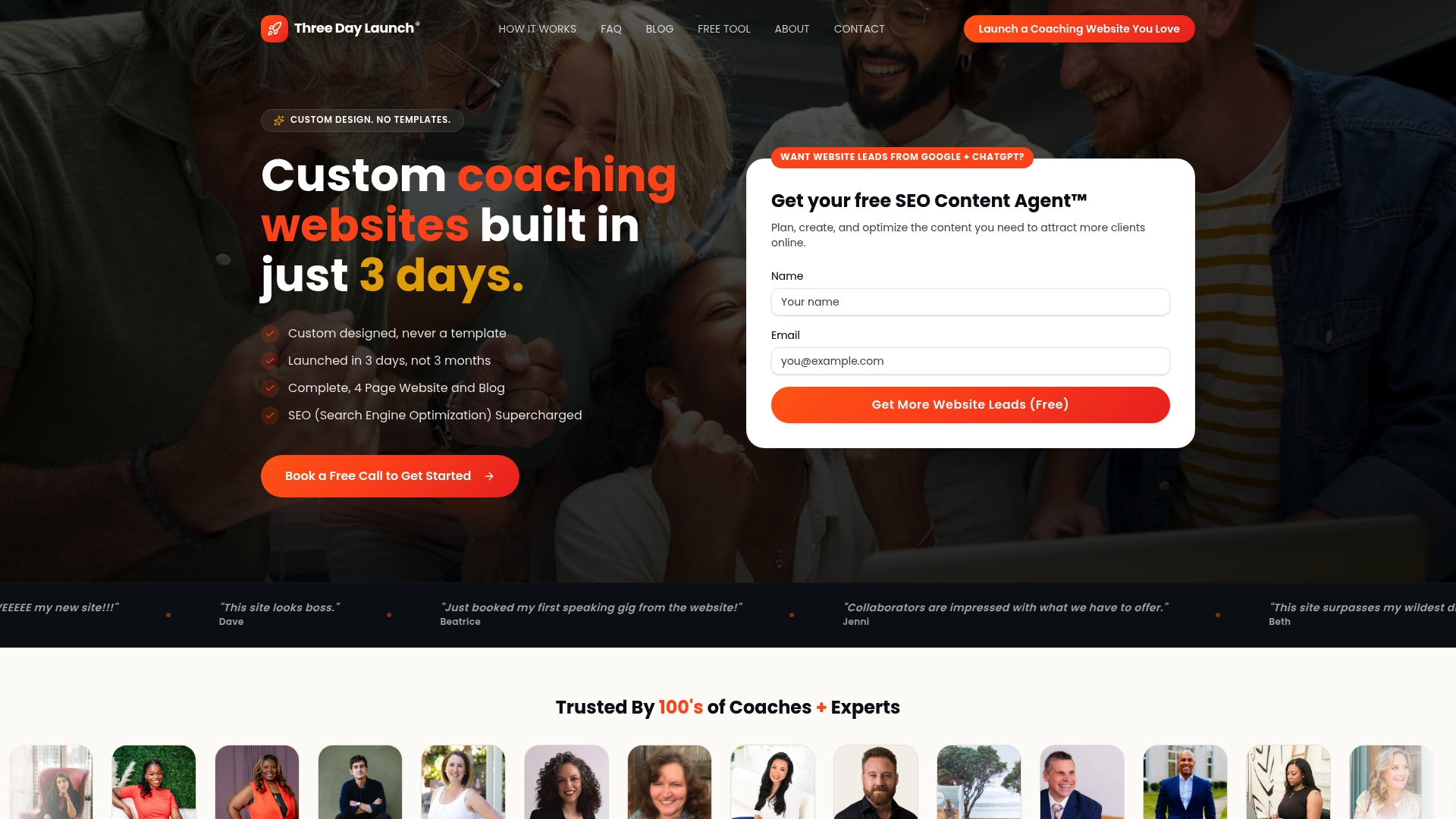
Three Day Launch builds fully custom, multi-page websites for coaches, consultants, and entrepreneurs in just three days.
NOT just a template with your logo slapped on it.
A real, strategically designed site built around your personal brand, your positioning, and your ideal client.
Coaches in life, finance, and health have seen real results, including significant increases in leads and sales from organic traffic, shortly after launch. If you are ready to stop losing clients to a website that does not represent you, get started with Three Day Launch and see what three days can do for your brand.
FAQ
What does it mean to align website design with your personal brand?
It means your visual identity, brand voice, and user experience all work together to communicate a consistent message to your ideal client. When these elements are aligned, visitors immediately understand who you are, who you help, and why they should trust you.
How many CTAs should a personal brand website have per page?
One primary CTA per page is the standard for personal brand sites. Multiple competing calls to action reduce conversions by forcing visitors to choose rather than act.
Should I build my brand strategy before designing my website?
Yes, always. Starting design before positioning causes expensive mistakes and brand drift. Define your audience, positioning, and messaging hierarchy first, then translate those decisions into visual design.
What is a style guide and do I actually need one?
A style guide documents your fonts, colors, button styles, imagery rules, and voice guidelines in one place. It prevents your site from drifting away from your brand as you add new content or work with different designers over time.
How does site speed affect my personal brand perception?
A slow site signals carelessness and erodes trust before a visitor reads a single word. Hero sections and landing pages should load in under 2.5 seconds to keep engagement high and bounce rates low.